Troubleshooting Of Big Bio Drum:

Problems:-

Bio-drum Rotating mechanism not working properly. when you start drum to rotate, chain slips from driving sprocket.

20170901_083958

On this problem we worked twice. For the first time, root causes that we found :-

Why chain slips from driving sprocket?

Because, there is no proper tension in chain drive.

Why there is no tension in chain?

Because, there are two parameters:

1. Length of chain is slightly more &

2. Alignment of Driver sprocket to the driven is not proper.

Why alignment is not proper?

Because,Driver sprocket slides over gearbox shaft.

Reasons for sliding sprocket :

a. Key in key-way is absent on gearbox shaft,

b. grub screw is not properly tighten.

Another observation is Plate on which gearbox is mounted is having slight bend centrally.

As i said that we have worked on this problem twice,

so for the first time we came with solutions that are:

1.Plate with Bend:-

As it is welded to motor mounting frame, we kept it as it is.

2.Driver sprocket alignment:-

a. Grub screw tightened,

b. we used wooden key for the key-way on Gearbox shaft.( Temporary solution)

3. Length of chain:

we made an arrangement so that we can increase or reduce the tension in chain drive. With the help of hollow cylinder (small) & shaft over which it rotates(sorry i don’t have any images of it).

Finally, mechanism runs properly and no slippage of chain from driving sprocket.

*********************************************************************************

Mistake:

we told the person who is working on this project to insert a metallic key in a key-way.

This suggestion made me to work twice on this mechanism.

**********************************************************************************

Because this person is not working continuously in Vigyan Ashram, so he gave this task to one of student from ashram.  He fitted metallic key but while doing this due to hammering Grub screw gets sheared and driving sprocket get offset from driven sprocket and again alignment is disturbed.

Due to shearing of Grub Screw sprocket get fitted on the shaft permanently.

While working second time:

  1. we disassemble all the parts from mechanism i.e. Motor, gearbox etc.
  2. With the help of drill machine we made a slot on the plate which is welded to motor mounting frame. Due to slot it is easy to move gearbox on the plate horizontally. alignment of Driving sprocket with driven is becomes easier.
  3. Reduce Length of the chain by removing linkages. 
  4. Gear box is lifted to a certain height so that the tension in drive is proper. we used wooden plate to lift gearbox from welded plate. This wooden plate will absorb vibrations if any.
  5. For the proper alignment of motor and gearbox, motor is also lifted with the help of washers.

From last few days it works properly without any disturbance so it is now on site testing.

Designs For Big Composting Unit:

One unit of composter is installed in Siddharth society, Aundh, Pune. Depending on the data or feedback from that we had to design a new unit of composter of big capacity.

For that purpose we worked with Mr. Soumitra Kulkarni sir in Nashik in their own manufacturing industry. Where, we supposed to get inputs from them for designing a new system.

At first Soumitra sir wants to go with existing design and test it.

But we have some alternatives for that system in my mind. But to prove that which one is good first we have to go with existing one.

So we create 3D model on solid works, and made a Bill of Material (BOM).

While designing a new system we focused on three major areas:-

  1. Ease of transportation:-

In earlier system whole frame structure is welded, so it’s difficult to transport the unit. we designed a frame so that it can be easily dissembled and assembled.

For old system square tube is used for frame structure. Disadvantage of that is, it’s get rusted quickly. It is not a long life solution.

So we select L-channel for frame.

  1. Drum Rotating Mechanism-

It is one of most important parameter under consideration. Earlier system consists number of components on which drum rotates, like motor, gearbox & chain drive to rotate two solid MS shafts. On this shaft four nylon rollers are fitted. For firm grip between drum and roller rubber is fitted over nylon rubber.

As number of components more, manufacturing dependability on them and manufacturing cycle time is more. Production becomes lengthy process.

To avoid that we referred an arrangement like drum is fixed on single shaft and to rotate that shaft mechanism can be used like direct coupling of motor and gearbox to drum shaft or chain and sprocket to connect gearbox shaft and drum shaft. So that there should be less no of components so complexity gets reduced and manufacturing gets also easy and low cycle time.

  1. Motor selection:-

Existing unit runs by 1 hp motor. So proper selection of motor need to be done.

we were expecting inputs in these calculations from employees from Nashik but disappointed.

3D models that we made:-

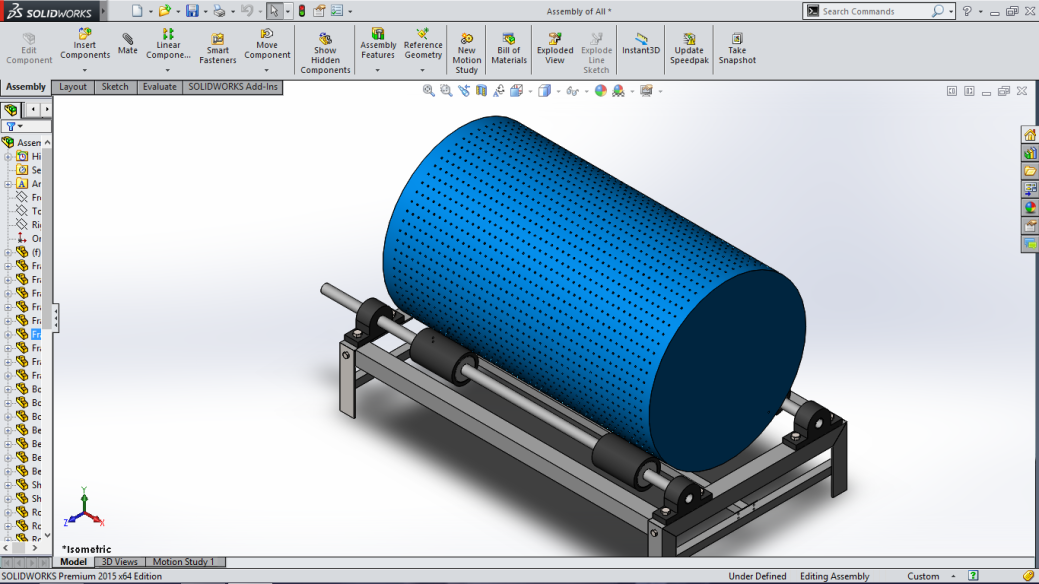
  1. Old drum:-

Screenshot (65)

While creating this model we had done some modifications in frame as using fasteners so that it can be easily dissembled and assembled. But after discussion with Yogesh sir(Nashik) , this arrangement is not suitable for  long term application concluded.

Also made a BOM for ease of  comparision.

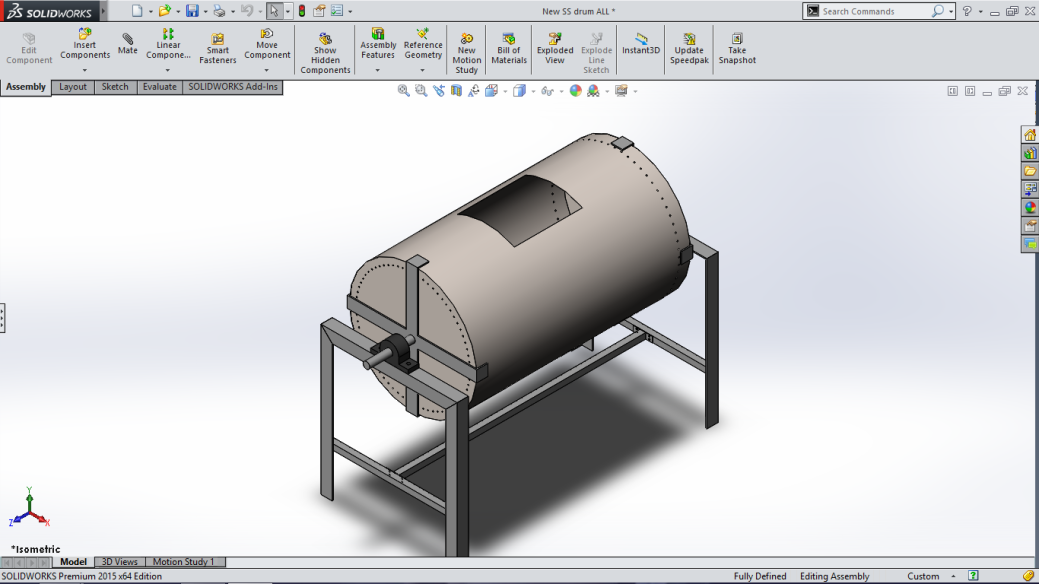
2. Design for Metal Cylindrical Drum:-

Screenshot (69)

This system is designed for metal drum. It’s appropriate height, length, width etc is fixed and design.

BOM is made for both M.S. drum and S.S. Drum.

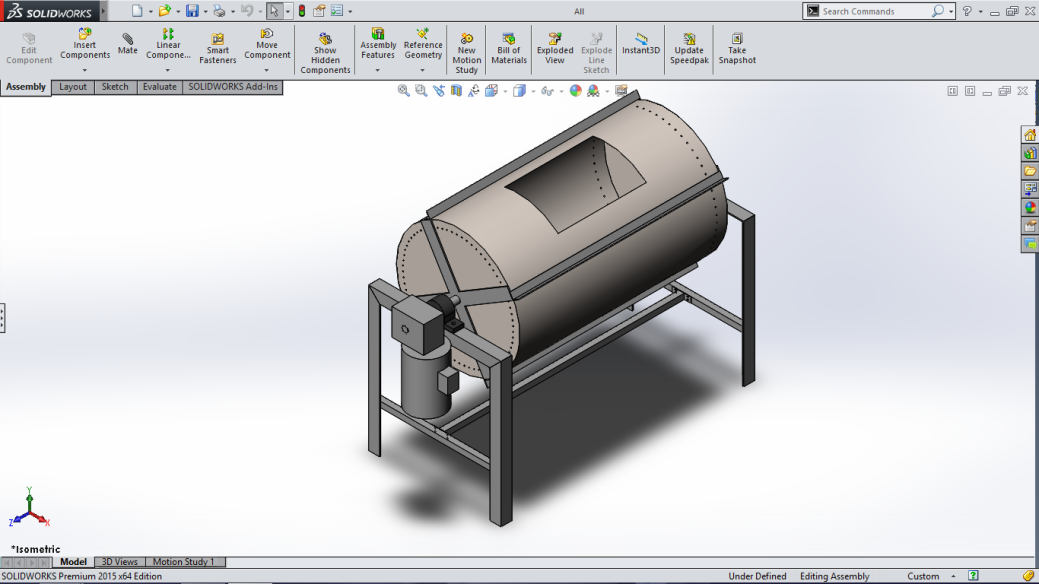
  1. Design for plastic Drum:

Screenshot (72)

untitled-3


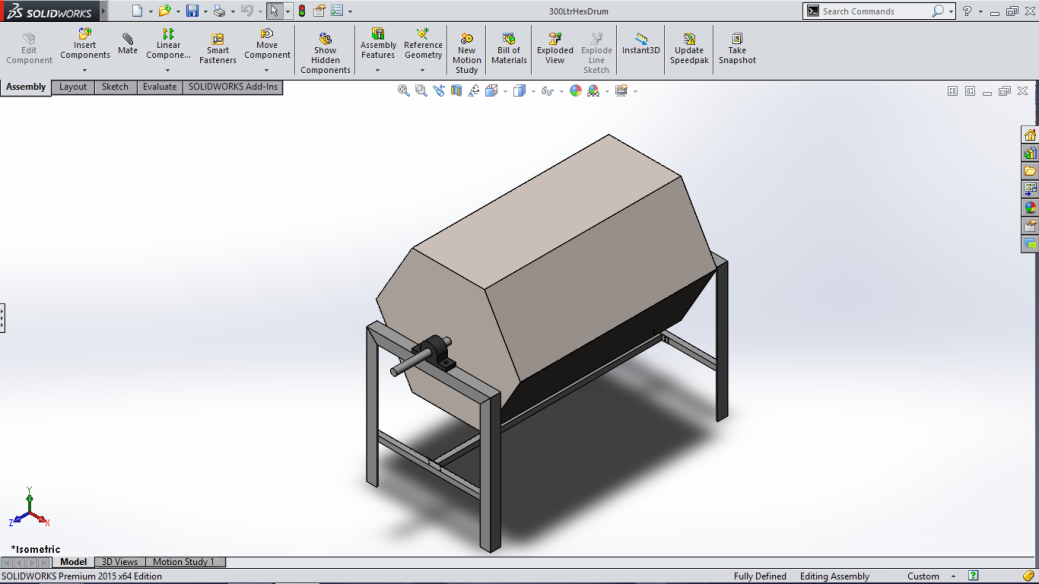
  1. Design for Hexagonal Drum 300 Ltr

Screenshot (74)

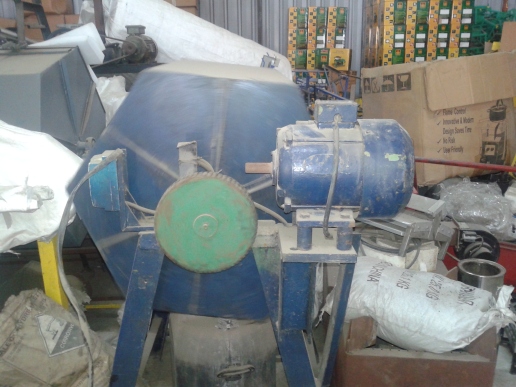
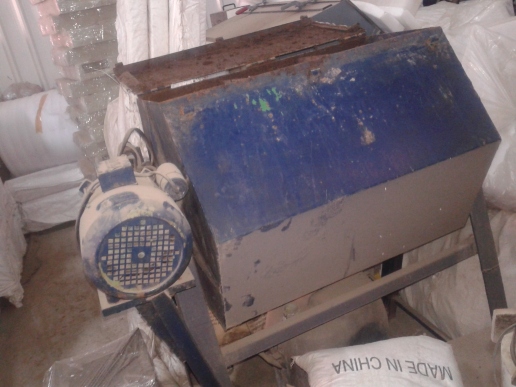
After all this process Soumitra sir gave us A mixer drum with motor and gear arrangement.

We all agree to use it as composter because its economical but problem was its worm shaft from gearbox is missing.

We approach to a gear manufacturer he promised to give it within 4 days. But he did not follow his words and wasted our 5 days.

Then we approached to another gear manufacturer who original manufacturer of this mixer drum.

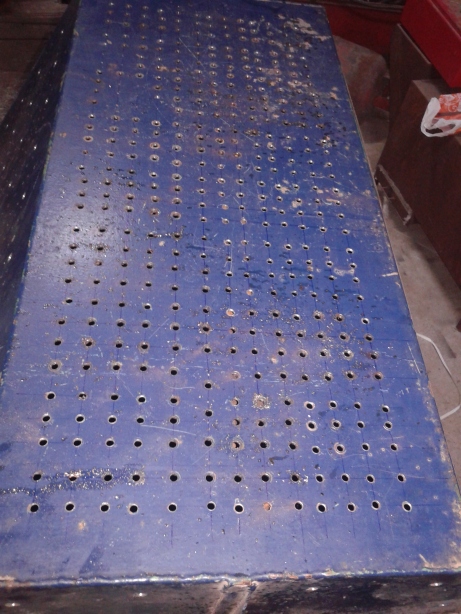
While gear is manufacturing we made perforation on drum to 3% open area.

20180322_185310


These are all designs we are having, we all are finally come to conclusion that lets fabricate Model No. 1, and we start it fabricating. The belows images and vedio shows actual field working of Big Composting Drum:

img_20180606_230816wp_20170513_13_58_45_pro

img_20180610_144042img_20180609_163844

The Unsuitable Design:

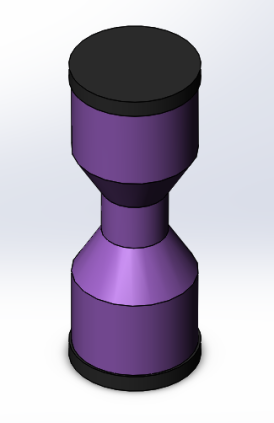
While first test is going on, with first prototype that made up with buckets, we made a design similar to that of bucket shape.

Screenshot (44)

But from the results of trial, it is concluded that composter of this shape is not suitable.

Because of its own shape, it is very difficult to push waste inside the drum & there is no proper mixing and ventilation as well.

So we moved towards the cylindrical shape.

Second Prototype:

While testing first prototype, during third trial we observed that first prototype performs very well after increasing openings of composter. Also composting trays at Dixit sir’s home are also doing good. So sir suggested to calculate opening area for that trays. So we calculate that for trays and also for the first prototype. we found the relation between open to closed surface area for trays and for prototype.

It is 15% for prototype and 40 % for trays.

20180227_171740

Also due to its shape of domestic composter, waste is not mixed very well so we moved for next prototype.

This second prototype should be of cylindrical shape, picture in our mind. So again we used whatever available and made a second prototype.

This is made up of 18% open area.

Actually we wanted to make it with of 15% opening  area but due to some mistakes in calculations, we drilled more holes on the cylinder… 🙂

So it is of 18% opening area.

Domestic Composter

Problem Statement:

Now a days, World is facing a big problem of waste management. In order to keep balance between waste production rate and waste disposal rate, everyone should come forward because the waste production rate of human is far far greater than waste disposal rate. Vigyan Ashram committed to step out and spread their helping hands(as we do always) towards the waste management for the global security. In order to solve problem, we first started to collect data about problem. For that we visited large composting plant. This plant is developed and maintained by Nashik Municipal Corporation and Nashik Waste Management Pvt. Ltd.


All the dry and wet waste is collected from entire city and processed in this plant. There are various sections in this plant. At entry point waste is weighted and segregated. Approximate 500 tons of waste collected per day.

Sections:-

  • RDF:- (Refused Derived Fuel)

Plastic waste is shredded and sent to furnace to burn directly. Shredded plastic is used as fuel. As per demand it supplied to customer. Average 250 tons per day plastic shredded.

  • Incinerator:-

Dead animals are burnt in this section. Average 25 animals per day. Mostly goats came to section.

  • Biogas plant:-

Black water from compost beds is collected through channels. It is filtered- filtered water from black water used in fire brigade and remaining supplied to biogas plant. Biogas is used to generate electricity & use to run plant. Generator specification: MCP-3P-50KVA

  • Compost:-

After segregation, beds of wet waste are formed and culture is spread over the beds. This bed is kept for 30 days to open atmosphere. Black water formed in these beds is used to biogas. After 30 days compost is ready. Small amount of plastic parts are removed from compost in two stages. Ready compost is packed and sells to farmers at 3000 Rs per ton. 45 to 50 kg compost is produced per day.

After analysing the problem, we start designing our Composter Prototype.

Following are the thing which we come across during problem analysis:

  • We have to take a chamber where the garbage can be mixed with the culture (Nothing but Bacteria) homogeneously.
  • In order to dry (Remove water) the waste we have to add some Green matter powder (Bhusa) in it. so we design chamber according to that.

First Prototype:

Proposed Design:

y-composter

This composter is made up with whatever resources available from ashram like  scrap and workshop in Vigyan Ashram. The primary objective is to make a functional model, test it and get result so why much to invest money on that. So our actual model was looks like below, we Put wet garbage+Culture and rotate it once in a day.:

Constructional specifications of first prototype:-

  1. Diameter of central cylinder = 125mm.
  2. Diameter hole on the circumference of buckets = 3mm.

Operating procedure followed:- 

  • Put wet garbage and rotate it once in a day.
  • Only non-cooked food is added.
  • No brown matter  added.
  • Only culture from Dixit sir is added.

Trials, Results and Modification:

  1. First Field trial:

Date

Quantity of waste(Kg)

03/01/2018

1+1.5 kg(Culture)

04/01/2018

1

05/01/2018

1.2
06/01/2018

1.5

07/01/2018

0.8

08/01/2018

1

Total

08 Kg


Observations after first trial:

  1. Liquid is formed at the bottom of composter.
  2. Odor is formed strongly.
  3. When composter rotates, waste is not freely moving and mixing , it requires to push down.


Conclusions:

  1. We have to add some Green matter or bhusa in the Drum.
  2. We have to provide holes for the Ventilation in order to stop odor.
  3. We have to increase Central pipe diameter in order to avoid chocking.

Modifications done before Second Trial:

  1. We made No. of holes on the circumference of buckets.
  2. Central cylinder made of Dia. 175mm.

2. Second Field trial:

20180115_170911

Date

Quantity of waste(Kg)

17/01/2018

1+0.5 kg(Culture)

18/01/2018

1

21/01/2018

1
22/01/2018

1.2

23/01/2018

1

Total

5.7 Kg


On 25 January 2018

20180125_170430

Observations:-

  1. Very small amount of liquid is formed and low odour.
  2. 25% weight reduction

Waste addition is continued…

Date

Quantity of waste(Kg)

25/01/2018

1.1

26/01/2018

0.5
28/01/2018

0.5

29/01/2018

0.5

Total

2.6 Kg


On 30 January 2018

Liquid and odour is still there but less as compare to first trial.

Conclusion:-

Air circulation must be improved.

Mistake-

Weight is not measured at the end of the second trial.

Modifications for third trial:-

  1. Diameter of hole on the circumference of bucket is made of 5 mm.


3. Third Field Trial:

20180130_182124

From the results of second trial conclusion is, open area is not sufficient for ventilation in first prototype, So we increased diameter of holes to 5 mm.

It is observed that results of increasing opening are very good as compared to first two trials. In 12 days of testing we added 14 kg of waste includes 1 kg culture at the beginning. On 11th day of testing small amount of moisture and odor is observed in core of composter. Hence there is anaerobic growth in core of composter. It’s may be because of shape of that buckets. On an average 10% weight loss is observed. Hence open area matters a lot for aerobic composting.